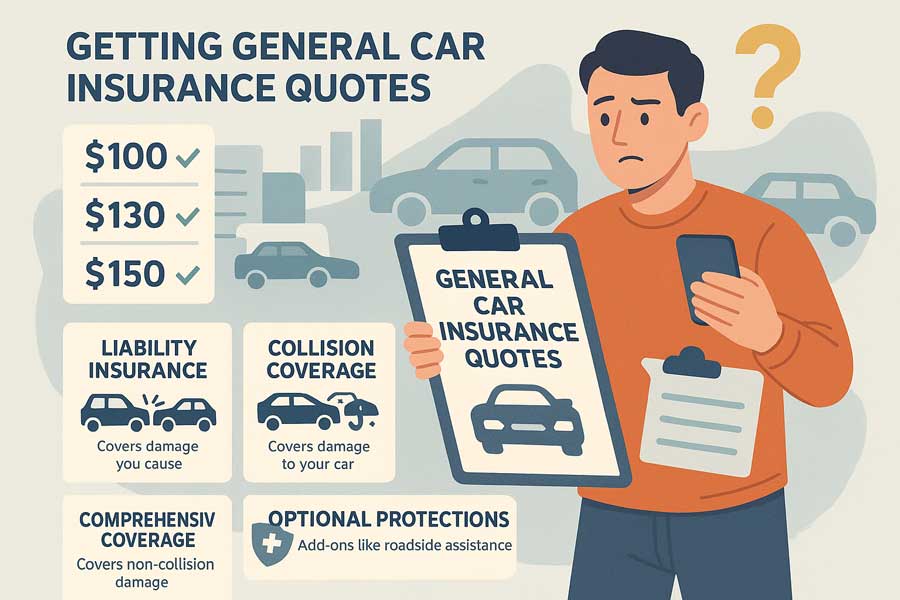
Securing accurate auto insurance quotes general is the first step toward protecting vehicles and drivers from financial risks. For instance, a policyholder in Chicago might receive a quote of $1,200 annually for comprehensive coverage, while a similar policy in Miami could cost $1,500 due to differences in local risk factors. Beyond just cost, these quotes reflect a complex interplay of personal driving history, vehicle specifications, and regional regulations. Auto insurance quotes general serve as the foundation for informed decision-making, ensuring drivers balance affordability with adequate coverage.
Auto insurance quotes general are critical for financial planning and risk mitigation. Without them, drivers risk overpaying for inadequate coverage or underinsuring their assets. Historically, the introduction of standardized quote systems in the 1950s revolutionized the industry by enabling fairer comparisons and reducing premium discrepancies. Today, these quotes empower consumers to navigate a crowded market of insurers, from traditional providers like State Farm to digital-first companies such as Lemonade.
This guide explores the mechanics behind auto insurance quotes general, from how insurers calculate them to how to leverage them for savings. Discover common pitfalls, strategies for negotiation, and tools to refine searches, ensuring drivers make confident choices aligned with their needs and budget.
1. How Auto Insurance Quotes General Are Calculated
Insurers determine auto insurance quotes general using proprietary algorithms that weigh risk factors into a formula. Core components include the driver’s age, location, vehicle make and model, and claims history. For example, a 25-year-old in a low-crash neighborhood with a Toyota Camry might receive a lower quote than a 60-year-old in a high-theft area driving a luxury SUV. These calculations also factor in credit scores, as studies by the Insurance Information Institute show a correlation between lower credit scores and higher premiums.
2. Key Factors Influencing Quote Accuracy
Several variables directly impact the precision of auto insurance quotes general. Drivers must provide accurate information, as discrepancies—such as misreporting a vehicle’s mileage—can lead to quote inaccuracies or policy denials. Additionally, seasonal factors, like winter weather in states like New York, can inflate quotes due to increased accident risks. Insurers adjust rates dynamically based on real-time data, such as traffic patterns or crime rates in specific ZIP codes.
3. Common Mistakes That Skew Auto Insurance Quotes General
Errors in applying for auto insurance quotes general can result in higher costs or coverage gaps. Below are three critical missteps and their implications:
- Ignoring Discounts
Many drivers overlook discounts like bundling home and auto policies or installing anti-theft devices. For example, adding a dashcam to a Honda Civic could reduce quotes by 10%, yet only 15% of policyholders apply for such discounts, according to a 2023 report by the National Association of Insurance Commissioners. Overlooking these can leave drivers paying premiums 20-30% higher than necessary.
- Underreporting Mileage
Claiming lower annual mileage than driven can lead to underinsurance. Insurers use mileage to estimate wear-and-tear risks; a driver claiming 5,000 miles annually but logging 15,000 might face higher claims costs, voiding discounts. In 2022, Progressive adjusted quotes upward by an average of 12% for policyholders whose mileage reports were later found inaccurate.
- Skipping Comprehensive Coverage
Opting for liability-only coverage to reduce quotes can leave drivers vulnerable to uninsured motorist costs. For instance, a collision with an uninsured driver in Texas could result in $50,000 in medical bills, leaving the policyholder responsible. Comprehensive coverage typically adds 10-20% to the quote but mitigates these risks.
- Not Updating Personal Details
Failing to update quotes after life changes—such as moving to a higher-crime area or adding a teen driver—can lead to overpayment. A family in Florida who forgot to inform their insurer about a 17-year-old driver saw their quote jump by $800 annually. Regularly reviewing and updating quotes ensures alignment with current circumstances.
- Choosing Cheapest Quote Without Comparison
The lowest auto insurance quotes general aren’t always the best deal. A policy with minimal coverage might save upfront but leave gaps. For example, Geico’s basic policy in California might cost $300 less than USAA’s, but USAA offers $50,000 in uninsured motorist coverage, which Geico lacks. Always compare coverage limits alongside premiums.
4. How to Compare Auto Insurance Quotes General Effectively
Comparing auto insurance quotes general requires more than price shopping; it demands a side-by-side analysis of coverage, deductibles, and exclusions. Tools like Policygenius or QuoteWizard allow users to input vehicle details and receive tailored quotes from multiple insurers. For instance, a driver in Arizona might find that Farmers offers a $1,000 quote with a $500 deductible, while Allstate provides a $900 quote with a $1,000 deductible. The latter might be preferable if the driver rarely files claims.
Beyond digital tools, consulting local insurance agents can provide nuanced insights. Agents often have relationships with insurers that result in exclusive discounts or policy customizations. For example, a broker in Seattle might negotiate a 15% reduction for a client with a clean driving record, something not always available through online platforms.
5. The Role of Credit Scores in Auto Insurance Quotes General
Credit scores play a significant role in determining auto insurance quotes general, particularly in states like California and Texas where insurers use credit-based underwriting. A driver with a credit score of 750 might receive a quote 15% lower than someone with a score of 650, based on statistical models linking creditworthiness to claims likelihood. This practice stems from research showing that lower credit scores correlate with higher risk of filing claims, as documented by the Consumer Federation of America.
Improving credit scores can lead to substantial savings. For example, a policyholder in Ohio who boosted their score from 620 to 720 saw their quote drop by $450 annually. Simple steps like paying bills on time or reducing credit card balances can positively impact quotes over time.
6. Seasonal and Location-Based Variations in Quotes
Geographic location drastically influences auto insurance quotes general, with urban areas like New York City and Los Angeles typically seeing higher premiums due to increased accident and theft risks. A study by the Insurance Research Council found that drivers in Miami pay 30% more on average than those in rural Nebraska. Seasonal factors further complicate this, as winter driving in states like Colorado or snowfall in upstate New York can spike quotes by 10-20% during peak months.
Insurers adjust rates based on local data, such as weather patterns or crime statistics. For example, quotes in Florida surge in hurricane season due to higher flood risks, while Arizona quotes may drop in monsoon months if accident rates decline. Drivers in high-risk areas can mitigate costs by investing in safety features like backup cameras or parking in secure garages.
7. Digital Tools and Apps for Auto Insurance Quotes General
Technology has democratized access to auto insurance quotes general, with apps like Progressive’s Snapshot and Lemonade’s AI-driven platform offering real-time adjustments. Progressive’s Snapshot, for instance, tracks driving habits and can reduce quotes by up to 30% for safe drivers. Similarly, Lemonade’s app uses machine learning to process claims instantly, potentially lowering premiums for policyholders with minimal filing history.
These tools also enable instant comparisons across insurers. A driver in Texas might use the Lemonade app to compare quotes from State Farm, GEICO, and Lemonade itself, receiving instant feedback on coverage gaps. While digital tools streamline the process, they should be supplemented with human advice for complex scenarios, such as multi-vehicle policies or high-value assets.
8. Negotiating Lower Auto Insurance Quotes General
Negotiating auto insurance quotes general requires strategic communication with insurers, particularly during annual renewals. Policyholders can leverage loyalty discounts, safe driving records, or even competitive quotes from other insurers to secure reductions. For example, a client of Allstate in Illinois who presented a lower quote from USAA received a 12% discount on their renewal.
Another tactic is bundling policies. Combining auto and home insurance with the same provider often yields a 10-15% reduction. Insurers like State Farm and Farmers offer significant bundling incentives, making this a cost-effective strategy for households with multiple policies. Additionally, reviewing quotes annually ensures that discounts for life changes—such as completing a defensive driving course—are applied promptly.
9. Understanding Deductibles and Their Impact on Quotes
Deductibles are a critical yet often overlooked component of auto insurance quotes general. A higher deductible—such as $1,000 instead of $250—can lower the quote by 20-30%, but it also means higher out-of-pocket costs in the event of a claim. For example, a driver in California with a $500 deductible might pay $800 annually, while increasing it to $1,500 could reduce the quote to $500 but require paying $1,500 for a minor fender bender.
The ideal deductible depends on financial preparedness. Drivers with emergency funds can afford higher deductibles to save on quotes, while those with limited savings may opt for lower deductibles to avoid catastrophic expenses. Insurers like USAA often allow policyholders to adjust deductibles mid-term, offering flexibility based on changing circumstances.
10. Special Considerations for High-Risk Drivers
High-risk drivers—those with DUIs, at-fault accidents, or poor credit—face significantly higher auto insurance quotes general. For instance, a driver in New Jersey with a DUI might see quotes double compared to a clean record, as insurers like State Farm classify them as high-risk. However, specialized insurers like The General or Mercury offer coverage to these drivers, albeit at premiums 50-100% higher than standard policies.
High-risk drivers can mitigate costs by enrolling in defensive driving courses, which some insurers like Progressive reduce quotes by 10%. Additionally, maintaining continuous coverage—even with a high-risk insurer—can prevent rate spikes during policy renewals. Over time, demonstrating responsible driving behavior can lead to gradual quote reductions as insurers reassess risk profiles.
11. The Future of Auto Insurance Quotes General
The landscape of auto insurance quotes general is evolving with advancements in telematics and AI. Insurers are increasingly using real-time data from connected vehicles to tailor quotes dynamically. For example, Tesla’s Full Self-Driving Beta program collects driving data that could, in the future, influence quotes based on autonomous driving safety metrics. Similarly, AI tools like those from Hippo Insurance analyze social media activity to assess risk, though this practice remains controversial due to privacy concerns.
Regulatory changes may also shape quotes. States like California are exploring mandatory telematics-based pricing, which could make quotes more personalized but also more volatile. Drivers should stay informed about these shifts to adapt their coverage strategies accordingly.
12. When to Seek Professional Help for Auto Insurance Quotes General
While comparing auto insurance quotes general independently is feasible, certain scenarios warrant professional assistance. Complex policies—such as those covering classic cars, commercial fleets, or international drivers—require expertise to navigate. An independent insurance agent can interpret fine print, identify hidden fees, or negotiate terms that online tools might overlook.
Professionals are also invaluable for high-net-worth individuals or those with unique risk profiles. For example, a collector of vintage Porsche 911s might need an agent to secure specialized coverage that standard insurers don’t offer. Similarly, business owners with company vehicles benefit from tailored commercial auto policies, which agents can customize to include liability protection for employees.

