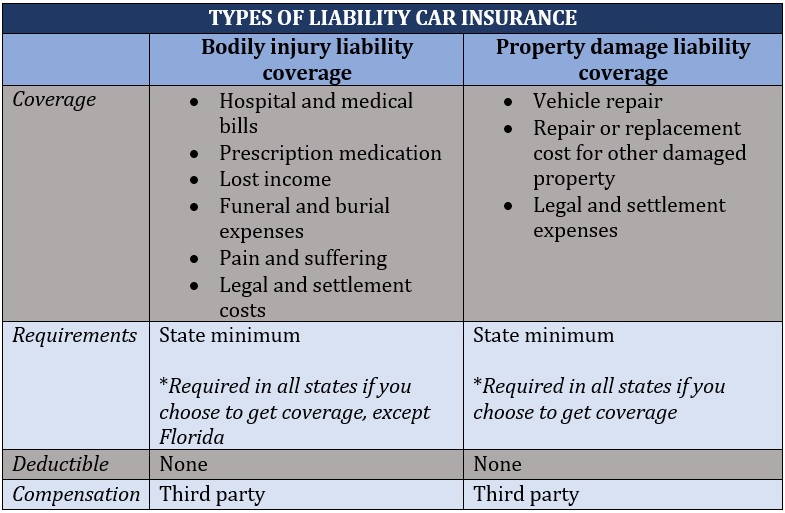
Auto insurance liability coverage is the portion of a car insurance policy that pays for damages to other people and property when the insured driver is at fault.
This coverage is crucial because it fulfills legal obligations, shields personal assets from lawsuits, and has evolved alongside traffic laws and court rulings to become a standard safeguard for motorists.
The following sections explore definitions, state requirements, coverage limits, claim processes, cost factors, and practical tips to help readers make informed decisions.
auto insurance liability coverage
This section defines the core components of liability coverage, including bodily injury and property damage protection, and explains how they function in real-world accidents.
- Bodily Injury Liability
Provides compensation for medical expenses, lost wages, and pain and suffering of third parties. For example, if a driver causes a collision injuring a passenger in another vehicle, this coverage pays the victim’s hospital bills, preventing the driver’s personal funds from being seized.
- Property Damage Liability
Covers repair or replacement costs for another person’s vehicle or property. A common scenario involves a driver hitting a parked car; the insurer settles the repair costs, sparing the policyholder from out‑of‑pocket expenses.
1. Legal Requirements and State Variations
Each U.S. state mandates minimum liability limits, often expressed as a three‑number series (e.g., 25/50/25). These figures represent per‑person injury, per‑accident injury, and property damage limits, respectively. States like California enforce higher minimums due to dense traffic, while others like Texas allow lower thresholds.
Failure to meet these requirements can result in fines, license suspension, or vehicle impoundment, emphasizing the importance of aligning policy limits with local statutes.
2. Determining Adequate Coverage Limits
Choosing appropriate limits involves assessing personal assets, driving habits, and risk tolerance. A driver with significant savings or a mortgage may opt for higher limits (e.g., 100/300/100) to protect against catastrophic lawsuits.
Insurance agents often use calculators that factor in net worth and potential accident scenarios, guiding consumers toward coverage that balances cost and protection.
3. Cost Factors and Premium Influences
- Driving Record
A clean record typically lowers premiums, while recent accidents or traffic violations increase rates. Insurers use actuarial tables to adjust prices based on risk profiles.
- Vehicle Type
High‑performance or luxury cars often attract higher liability premiums due to perceived greater risk of severe accidents.
- Geographic Location
Urban areas with dense traffic see higher rates compared to rural regions, reflecting the increased likelihood of collisions.
- Deductibles and Bundling
Selecting higher deductibles or bundling auto with home insurance can produce discounts, though the trade‑off involves higher out‑of‑pocket costs after a claim.
4. The Claim Process Explained
When an accident occurs, the insured must promptly notify the insurer, provide a police report, and gather witness statements. The insurer then investigates, determines fault, and negotiates settlements with third parties.
Efficient documentation, such as photos of damage and medical records, accelerates claim resolution and reduces the chance of disputes.
5. Common Pitfalls and How to Avoid Them
- Underinsuring
Choosing minimum state‑required limits may leave a driver vulnerable to lawsuits that exceed coverage, potentially resulting in personal asset loss.
- Assuming “Full Coverage” Includes Liability
Some policies bundle comprehensive and collision with liability, but the limits for each component are separate and must be reviewed individually.
- Neglecting Policy Updates
Life changes—such as buying a home or adding a teen driver—should trigger a review of liability limits to maintain adequate protection.
6. Enhancements and Optional Add‑Ons
Many insurers offer supplemental liability options, like uninsured/underinsured motorist coverage, which steps in when the at‑fault driver lacks sufficient insurance. Umbrella policies provide an extra layer of liability protection beyond standard auto limits.
These enhancements are especially valuable for high‑net‑worth individuals or professionals exposed to higher liability risks.
Frequently Asked Questions
Quick answers to the most common queries about auto insurance liability coverage.
Question 1: What does liability coverage actually pay for?
Liability coverage pays for medical expenses, lost wages, pain and suffering of third parties, and repair or replacement costs of another person’s property when the insured driver is legally responsible for the accident.
Question 2: Are state‑required minimums enough?
Minimums meet legal obligations but often fall short of covering severe accidents. Drivers with substantial assets should consider higher limits to avoid personal financial exposure.
Question 3: How is the premium calculated?
Premiums are influenced by driving history, vehicle type, location, coverage limits, and discounts such as bundling policies or maintaining a clean record.
Question 4: Can liability coverage be increased later?
Yes, policyholders can request higher limits during renewal or after major life events, though rates may rise accordingly.
Question 5: What is an umbrella policy?
An umbrella policy provides additional liability protection above the limits of underlying policies, offering a safety net for catastrophic claims that exceed standard auto coverage.
Question 6: Does liability coverage protect the driver’s car?
No, liability only covers damages to others. Separate collision or comprehensive coverage is needed to repair the insured’s own vehicle.
Tips for Maximizing Your Liability Coverage
Practical steps to ensure optimal protection and cost efficiency.
Tip 1: Review limits annually to match changes in assets and risk exposure.
Tip 2: Bundle auto with home or renters insurance to unlock multi‑policy discounts.
Tip 3: Maintain a clean driving record to qualify for lower premium tiers.
Tip 4: Consider an umbrella policy if net worth exceeds standard liability limits.
Tip 5: Increase deductibles only if sufficient emergency funds are available.
Tip 6: Add uninsured/underinsured motorist coverage to protect against drivers lacking adequate insurance.
Tip 7: Use telematics or safe‑driver programs offered by insurers for potential savings.
Tip 8: Document vehicle condition and accident details thoroughly to streamline claims.
Tip 9: Shop around and compare quotes from multiple carriers each renewal period.
Tip 10: Consult a licensed insurance agent to tailor coverage to specific lifestyle needs.
Conclusion
Auto insurance liability coverage forms the backbone of financial protection for drivers, ensuring that third‑party injuries and property damage are handled without jeopardizing personal assets. Understanding legal requirements, selecting appropriate limits, and leveraging optional enhancements are essential steps toward comprehensive risk management.
By staying informed and periodically reassessing policies, motorists can adapt to evolving circumstances and maintain robust coverage that safeguards both peace of mind and financial stability.

