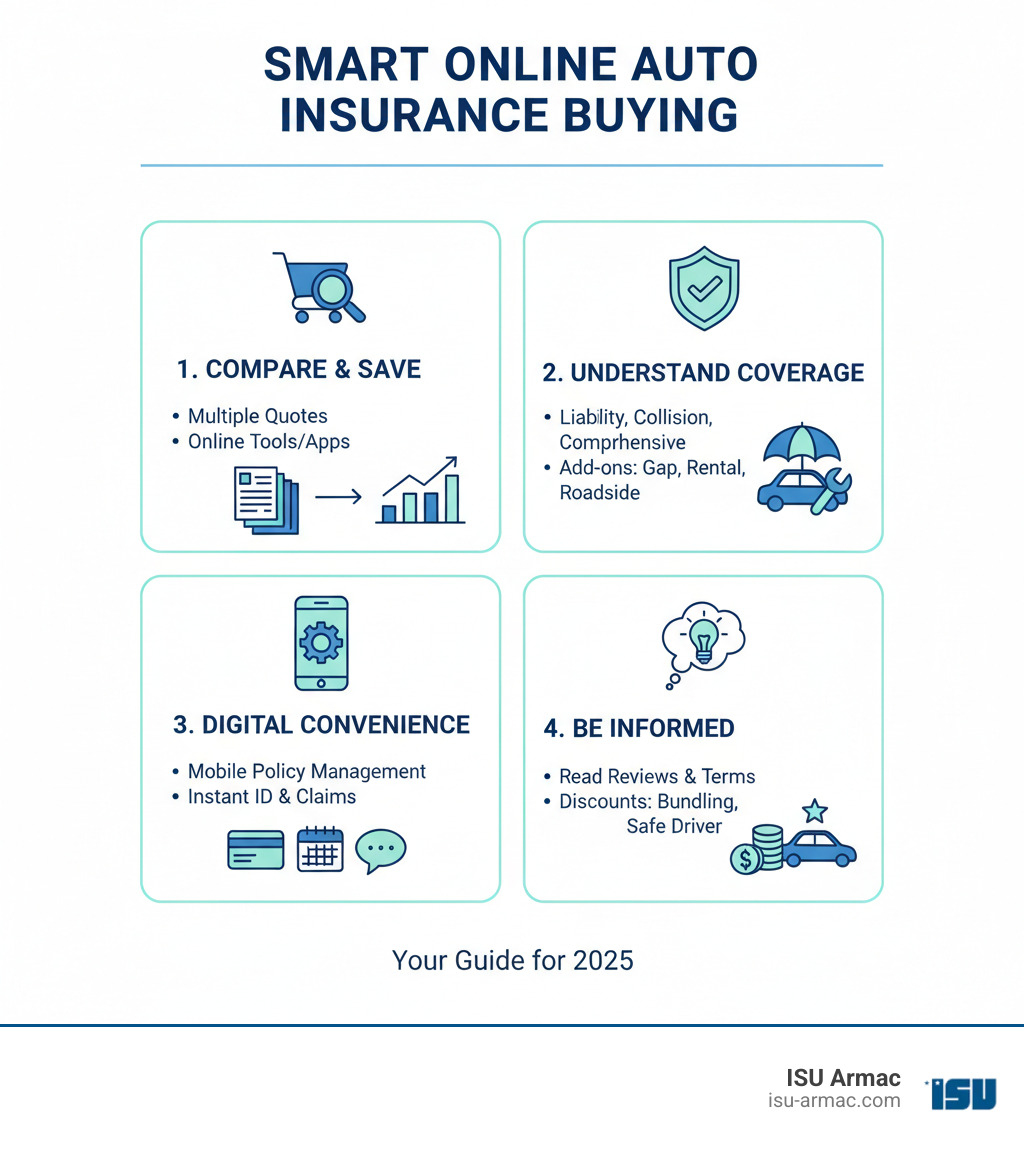
Auto insurance online today offers drivers the ability to purchase coverage through digital platforms within minutes, eliminating the need for in‑person visits. For example, a driver in Ohio can log onto a provider’s website, input vehicle details, and receive a binding policy instantly.
This convenience translates into faster price comparisons, reduced paperwork, and often lower premiums due to streamlined underwriting. Historically, purchasing car insurance required phone calls and mailed forms; the shift to web‑based portals began in the early 2000s and accelerated with mobile adoption.
The following sections examine pricing dynamics, coverage options, policy customization, claims processing, security considerations, and practical steps for selecting the right plan.
1. Auto insurance online today
Understanding the core components of digital auto coverage helps consumers make informed decisions. The ecosystem includes instant quoting engines, mobile app integration, and real‑time policy issuance.
- Instant Quote
Algorithms calculate rates in seconds based on zip code, vehicle model, and driving record, allowing a Chicago driver to see three options before lunch.
- Mobile App Integration
Providers offer apps that store proof of insurance, send renewal reminders, and enable on‑the‑go adjustments, as seen with State Farm’s mobile platform.
- Transparent Pricing
Breakdowns of coverage components appear side‑by‑side, helping a Texas motorist compare liability versus comprehensive costs without hidden fees.
- Instant Policy Issuance
Electronic signatures finalize the contract, and a digital ID card becomes available instantly, eliminating the waiting period for paper documents.
- 24/7 Support
Chatbots and live agents provide assistance at any hour, ensuring that a late‑night claim can be logged without delay.
2. Pricing dynamics
Algorithmic pricing leverages big data to adjust rates in real time. Geolocation factors such as traffic density and crime statistics influence the base premium, while telematics devices capture mileage and driving behavior for further refinement.
- Algorithmic Pricing
Machine‑learning models weigh hundreds of variables, producing a customized quote that reflects both risk and market competition.
- Geolocation Factors
Residents of high‑accident corridors in California often see higher rates than those in rural Montana, illustrating location‑based risk assessment.
- Driving History Weighting
Recent accidents or violations trigger surcharges, whereas a clean record for five years can unlock loyalty discounts.
These dynamics encourage drivers to maintain safe habits and consider relocating or adjusting mileage to achieve cost savings.
3. Coverage options
Digital platforms present a menu of coverage types ranging from mandatory liability to optional gap insurance. Consumers can toggle add‑ons such as roadside assistance, rental reimbursement, and rideshare protection, seeing the financial impact instantly.
Understanding the distinction between comprehensive (covers non‑collision events) and collision (covers impact with another vehicle) remains essential, especially for newer vehicles whose value justifies broader protection.
4. Policy customization
Customization tools let drivers adjust deductibles, limit amounts, and coverage territories with a few clicks. Raising a deductible from $500 to $1,000 typically reduces the premium by 5‑10 percent, a trade‑off that suits low‑risk drivers.
Bundling auto insurance with homeowners or renters policies through the same online portal often unlocks multi‑policy discounts, streamlining billing and documentation.
5. Claims processing
Efficient claims handling is a hallmark of modern auto insurance online today, reducing settlement times and enhancing satisfaction.
- Digital Claim Submission
Upload photos of damage via a mobile app, and the system generates a claim number within minutes, as demonstrated by Allstate’s Quick Claim feature.
- AI Damage Assessment
Computer vision evaluates repair costs from images, providing an estimate that rivals a physical inspection in many cases.
- Fast Payout
Approved claims trigger electronic transfers directly to the policyholder’s bank, often within 48 hours of approval.
These innovations reduce paperwork, accelerate reimbursements, and improve overall trust in the insurer.
6. Security and privacy
Handling personal and financial data online demands robust security protocols. Encryption, two‑factor authentication, and regular security audits protect sensitive information from breaches.
Regulatory compliance with standards such as GDPR and CCPA ensures that consumer data is managed responsibly, fostering confidence among drivers who share vehicle VINs and driving histories.
Frequently Asked Questions
Common queries about digital auto coverage are addressed below.
Question 1: How quickly can a policy be activated after purchase?
Most providers issue a digital proof of insurance within minutes of completing payment, allowing immediate legal driving.
Question 2: Are online rates comparable to traditional agency quotes?
Competitive algorithms often produce rates equal to or lower than agency quotes, especially when discounts for safe driving are applied.
Question 3: What documents are needed for an online application?
Typical requirements include driver’s license number, vehicle identification number, and a recent mileage reading; additional proof of residence may be requested.
Question 4: Can coverage be modified after purchase?
Most platforms allow mid‑term adjustments such as adding a new driver or changing deductibles, with the premium recalculated instantly.
Question 5: How secure is the payment process?
Encrypted payment gateways comply with PCI‑DSS standards, safeguarding credit‑card information during transactions.
Question 6: Is a physical insurance card still required?
Electronic cards are accepted in most states, though a printed copy can be generated for jurisdictions that still mandate paper proof.
Tips for Buying Auto Insurance Online Today
Effective strategies help maximize value and coverage.
Tip 1: Compare at least three quotes. Reviewing multiple offers reveals price gaps and feature differences.
Tip 2: Use the same vehicle details. Consistent inputs ensure a fair comparison across platforms.
Tip 3: Check discount eligibility. Safe driver, multi‑policy, and anti‑theft device discounts can lower premiums significantly.
Tip 4: Review coverage limits. Ensure liability limits meet state minimums and personal risk tolerance.
Tip 5: Evaluate deductible impact. Higher deductibles reduce monthly costs but increase out‑of‑pocket expenses after a claim.
Tip 6: Read the fine print. Look for exclusions, cancellation fees, and renewal terms before committing.
Tip 7: Verify insurer’s financial strength. Ratings from agencies like AM Best indicate long‑term claim‑paying ability.
Tip 8: Test customer support. A quick chat or call can gauge responsiveness for future claim scenarios.
Tip 9: Consider bundling options. Combining auto with home or renters insurance often yields multi‑policy discounts.
Tip 10: Use telematics wisely. If a usage‑based program rewards low mileage, maintain accurate tracking for lower rates.
Tip 11: Update mileage annually. Accurate mileage prevents overpaying for coverage based on outdated estimates.
Tip 12: Store digital proof securely. Save the electronic ID card in a cloud folder accessible during roadside stops.
Tip 13: Set renewal reminders. Automated alerts avoid lapses in coverage when policies expire.
Tip 14: Review claim history. A clean claim record often qualifies for loyalty discounts on renewal.
Tip 15: Keep personal data protected. Enable two‑factor authentication on the insurer’s portal to guard against unauthorized access.
Conclusion
The evolution of auto insurance online today reshapes how drivers secure protection, offering speed, transparency, and customization that traditional methods lack. By understanding pricing dynamics, coverage choices, policy tailoring, claim efficiency, and security measures, consumers can navigate the digital marketplace confidently.
Continued advances in data analytics and mobile technology promise even more personalized experiences, positioning online platforms as the default avenue for vehicle coverage in the years ahead.

